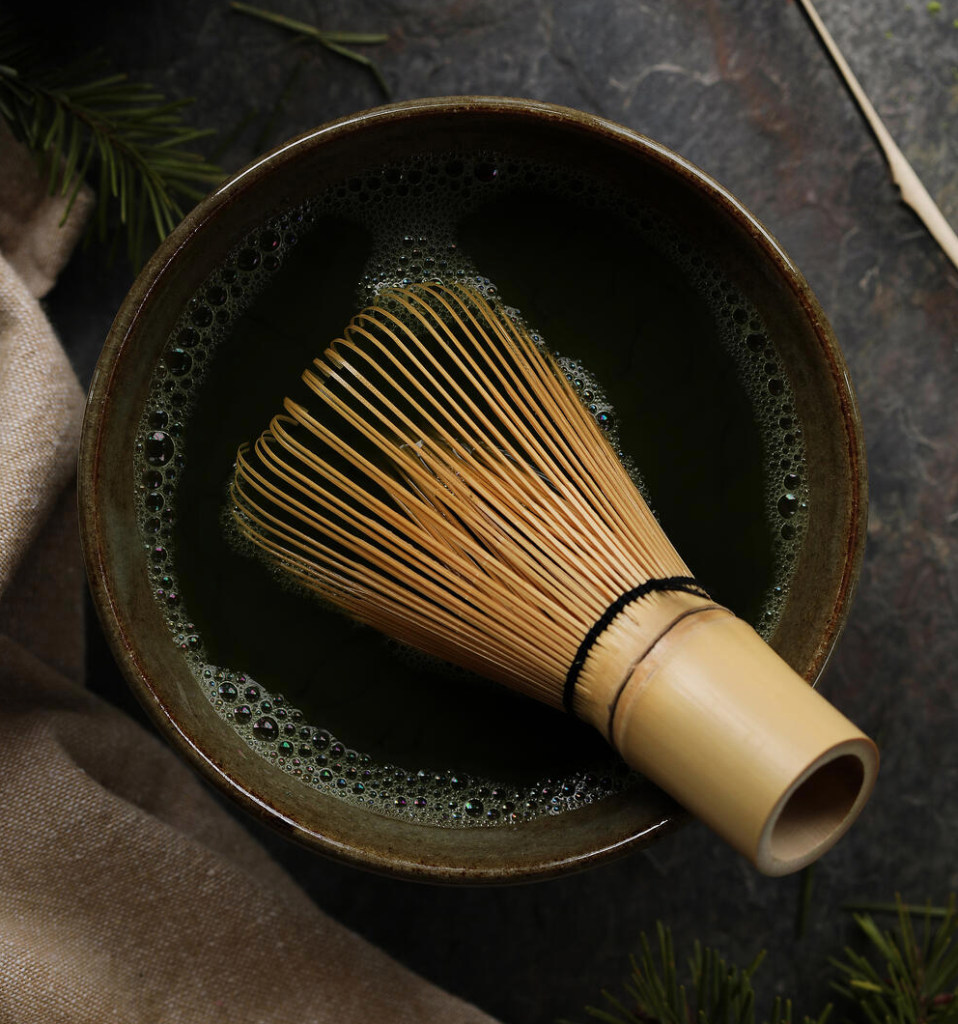
Matcha is a high quality powder form of green tea from Japan. The reason I wanted to teach a lesson on matcha is because I truly believe in the healing powers matcha provides and think it should be more widespread. Matcha has a unique history dating back to the 600s that is connected to the religion of Buddhism and is used in tea ceremonies. In the United States, matcha is available as regular tea with hot water, lattes, pastries, ice cream, and baked goods. There are a few different types of matcha. Culinary is used for baking, premium is typically used in cafes for beverages, and ceremonial is the highest quality providing the most benefits. I will be talking about ceremonial matcha for my presentation.
A Little Bit of Matcha History…
Matcha was discovered by the Tang Dynasty that ruled China during the 7th to 10th century. The was steamed to form into bricks, then roasted, and went through a process to be turned into fine powder. Then, the powder was mixed with salt and water to make the tea. In the 11th century, a Japanese Buddhist Monk, Eisai, was studying Buddhism in China when he found matcha. He realized the tea improved his meditation sessions by creating a state of calm alertness from the combination of caffeine and l-theanine. In 1191, he went back to Japan with the tea seeds and first planted them in Kyoto, home to numerous Buddhist temples. The tea seeds were known to be the highest quality in Japan at the time and considered luxurious to have. Zen Buddhists changed the method that Eisai brought to Japan to make the tea by growing the green tea plant in the shade to maximize its health benefits (Matchaful). All green tea comes from the plant Camellia Sinensis, but the different types come from how long the plant is grown for, the conditions it is in, and the process the leaves go through before and after harvesting. Zen Buddhists changed the method by making Tencha leaves which are grown in the shade for about a month before harvesting. In summary, the leaves are hand picked, dried, and grinded using a stone wheel. So even though Matcha originated in China, it became a popular beverage in Japan and the techniques to make it became perfected there, so therefore this is where matcha comes from today.
Before my presentation, I would like my classmates to watch this video to learn about how matcha is grown and harvested, how to tell the quality of matcha, the benefits, the process it goes through to become in powdered form, and how it is used in a tea ceremony.
For class, I look forward to discussing more about the history, the regions matcha is grown in, how to tell high quality from low quality matcha, it’s healing powers, and making a cup of ceremonial matcha to taste.
